Posts

Proof of reserves is proof of nothing
Image
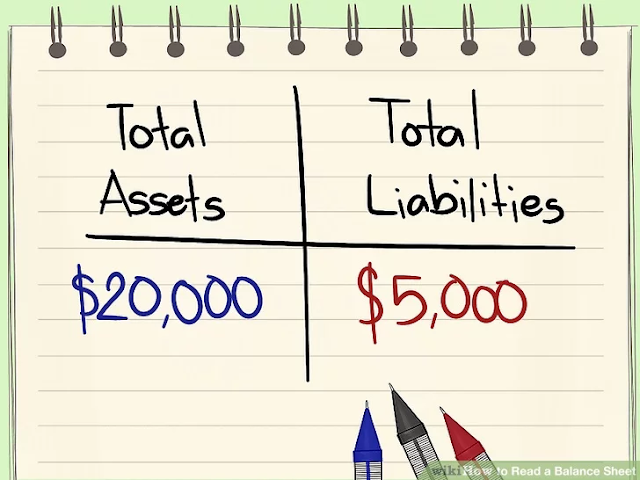
Proof of reserves is all the rage on crypto platforms. The idea is that if the platform can prove to its customers' satisfaction that their deposits are fully matched by equivalent assets on the platform, their deposits are safe. And if the mechanism they use to prove this uses crypto technology, that's even better.  Crypto tech solutions have surely got to be much more reliable than traditional financial accounts and audits - after all, FTX passed a U.S. GAAP audit .  No, they aren't. Proof of reserves as done by exchanges like Binance does not prove that customer deposits are safe. It is smoke and mirrors to fool prospective punters into relinquishing their money, just like claims that exchanges and platforms are "audited" or have "insurance". There are no audits in the crypto world, there is no insurance, and as I shall explain, proof of reserves proves absolutely nothing. The biggest crypto exchange, Binance, uses a Merkle tree proof of reserves. H...
Binance and its stablecoins

Image
Yesterday, the SEC issued a Wells notice to the stablecoin issuer Paxos , warning it that the SEC intended to take legal action against it for issuing an unregistered security. The security in question is the fully-reserved stablecoin BUSD (Binance USD), which Paxos issues expressly for use on the Binance crypto exchange. The Wells notice doesn't apply to Paxos's other fully-reserved stablecoin, USDP, which it issues for use on its own platform.  A few hours later, the New York Department of Financial Services (NY DFS) ordered Paxos to stop minting BUSD. In a consumer alert published on its website, the NY DFS said there were "several unresolved issues related to Paxos’ oversight of its relationship with Binance in regard to Paxos-issued BUSD." It didn't specify what these issues were, but it went on to clarify that Paxos's BUSD and Binance's coin of the same name are not the same thing, and that it only regulates Paxos's coin, not Binance's: ...

The fatal flaws of Celsius Network

Image
Celsius Network was never a real business. It did not have a viable business model. Really, it was a momentum trading scheme that relied on the premise that crypto prices would always rise. And when they didn't, it resorted to fake valuations and market manipulation to escape insolvency. It was fraudulent from the start.   This is the conclusion I've reached after studying the U.S. Examiner's final report (yes, I've read all 476 pages of it) and Celsius's audited reports and accounts up to 31st December 2020.  There are no more recent audited accounts. It was due to file its 2021 accounts by 31st December 2022, but it did not do so. The accounts are now significantly overdue. I doubt if they will ever be filed.  The U.S. Examiner's report reveals deep and long-lasting insolvency, concealed by layer on layer of fraud. Whether Alex Mashinsky, Celsius's founder, owner and CEO, knew that the devices he used to conceal the company's insolvency were fraudulen...

Hollow Promises

Image
Today, I bring you the sad tale of a crypto lender that promised safety and high returns to its depositors, but whose promises have proved to be as hollow as its name.  Donut Inc., a self-proclaimed DeFi" lender, has a "Proof of Reserves" section on its website . This is supposed to reassure customers that their deposits are matched one for one by the platform's liquid assets. I am firmly of the opinion that "Proof of Reserves" statements prove nothing without a corresponding statement of liabilities, since deposits aren't the only form of liability, and encumbered assets can't back deposits. But in this case, the "Proof of Reserves" is worse than useless. It is actually fiction. And it conceals a truly dreadful situation for Donut's customers.   As of today, this is what the "Proof of Reserves" says:  By itself, this doesn't prove anything at all. It's just an unsupported statement of what the company calls "ass...

Snake oil sellers in the stablecoin world

Image
  It's been evident for some years now that those selling risky crypto products to risk-averse investors like to have federal branding on their snake oil. Tether claimed to have 100% actual dollar backing for its stablecoin. Various exchanges and platforms claimed that customer deposits were FDIC insured. The New York Attorney General showed that Tether didn't have 100% dollar backing or anything like it. And now the FDIC has sent cease & desist orders to  FTX , Voyager and several other crypto companies , it has become dangerous even to mention FDIC insurance in marketing material.  But that doesn't meant they've given up on the quest for a credible claim to Federal backing. The new Holy Grail is gaining access to Federal Reserve funding without becoming a licensed bank. Accordingt to analysts at Barclays, Circle, the issuer of the USDC stablecoin widely regarded in crypto markets as a "safe" dollar equivalent, may have found a way:  This screenshot com...