Posts

Showing posts with the label national insurance

We need to talk about the state pension

Image
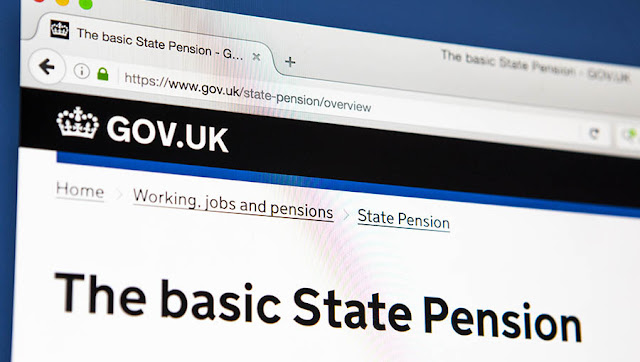
My post-Budget article for the Radix thinktank considers the future of the State Pension in the light of the Chancellor's changes to National Insurance.  The headline news in the Budget was a 2p cut in the main rate of National Insurance contributions for employed and self-employed people. This was the second such cut, the first being in the Autumn statement. And the Chancellor expressed an intention to go much further. He trailed the idea of abolishing personal National Insurance completely.  These changes will have far-reaching implications for the state pension...  To read the rest of the post, click here .  Related reading: The Fund that isn't a fund
The true story of NI autocredits

Image
In Waspiland, there's a  claim  doing the rounds that women have been unfairly treated regarding National Insurance (NI) contributions. Specifically, that men received NI credits enabling them to retire at 60, while women had to work till 66. As is so often the case with claims made by Waspi - or in this case, the hardcore Back to 60 group - the truth is rather different. Men did receive NI credits, yes, but there was no unfairness to women. Rather, the unfairness was to men.  As always, the story starts with the unequal state pension ages of men and women. When the present state pension system was introduced in 1946, women's state pension age was set at 60, and men's was 65. To qualify for a full state pension, women had to make 39 years of NI contributions: because their state pension age was 5 years later, men had to make 44 years of contributions.  During the inflationary 1970s, unemployment gradually rose to the highest levels since the Great Depression. Youth u...

The NI Fund's reserves don't pay down the National Debt

Image
The NI Fund discussed in this post covers England, Wales and Scotland only. Northern Ireland has a separate NI Fund, which is excluded from the figures given in this post. However, it works in exactly the same way as the Fund discussed here.  Sometimes the government is its own worst enemy. HM Treasury's hamfisted response to this Freedom of Information request from Trudy Baddams of the pension rights campaign group "We Paid In, You Paid Out", has caused a very silly storm. Ms Baddams asked this question: Can you confirm that the National Insurance Fund (NIF) is presently in surplus and by how much? Can you also please confirm how much has been paid from the fund into the National Insurance Investment Fund in the last 10 years? In response, HM Treasury pointed her to the NIF accounts , which are produced yearly. But then it added this paragraph (my emphasis): The latest NIF Accounts show that the balance of the NIF increased by £2,286,469,000 in 2017-18. ...

The real victims of the "Rape of the National Insurance Fund"

Image
In a recent article , David Hencke claims that politicians of all three main parties agreed to raise the state pension age for women to compensate for the ending of the Treasury's contribution to the National Insurance fund. This isn't true. Not only is it untrue, but it directly contradicts the research upon which his article relies, and dishonours the memory of a man who fought hard for pensioners' rights. Hencke based his article on this piece  by Tony Lynes, written in 2006 as a basis for a National Pensioners Convention factsheet on the National Insurance (NI) Fund. As readers of this blog will know, the NI Fund is not a pension fund. It is a clearing house for receipt of NI contributions and their disbursement to pensioners and beneficiaries. Tony Lynes describes its workings perfectly: National Insurance is the system through which contributions by working people and employers are paid into a fund - the National Insurance Fund - to finance a range of benefit...

Dangerous assumptions and dodgy maths

Image
The last published accounts for the NI Fund show that, contrary to popular mythology, it does not have an enormous surplus. In fact it is currently running a deficit, as it has been for the last five years . Its reserves have fallen to the point where the Government was forced to top them up to prevent them falling below the statutory minimum of 1/6 of payments out of the fund. So I was somewhat surprised to read written evidence to the Work and Pensions Select Committee which appeared to contradict the accounts. The evidence comes from Rita Abrahams and references the Social Security Up-Rating Report by the Government Actuary, published in January 2016. Here is how Ms. Abrahams has interpreted the Government Actuary's findings: The latest Actuary report published in January projected that by April 2021 our National Insurance Fund will have a balance of £58 billion; thus after setting aside the working balance requirement of £18.52 billion (1/6th of payments) a surplus w...

The Fund that isn't a fund

Image
There is a great deal of confusion over National Insurance - what it is, how it works and what it funds. I have attempted to clear up some of the muddle elsewhere . But partly, it stems from the existence of something called the NI Fund. If there is a Fund, surely this implies that National Insurance contributions are invested? If so, those (like me) who insist that state pensions are unfunded are talking gibberish. There is indeed a NI Fund. But it is badly named. It would be more accurate to call it the NI Clearing House. It receives NI contributions from workers and employers, and it disburses payments to pensioners and benefit recipients. As long as NI receipts exceed pension & benefit payments, the Fund runs a surplus. But when pension & benefit payments exceed receipts, the Fund runs a deficit. When a clearing house like the NI Fund runs a surplus over a number of years, it builds up reserves. The NI Fund has significant reserves, mostly built up since the start of th...