Posts

Showing posts with the label cash

The blind Federal Reserve

Image
Ever since the secured overnight repo rate (SOFR) spiked to 10% in September, there have been dire warnings that these exceptional movements show the financial system is fundamentally broken. The story goes that the post-crisis financial system is so dysfunctional that it is unable to operate without continual injections of money from central banks. The Fed's attempt to reduce the $4.2tn of reserves it added to the financial system in three rounds of QE has dangerously destabilised the financial system, so it has now had to re-start asset purchases to restore the lost reserves and refloat tottering banks. It's fair to say that much has changed since the financial crisis. Prior to 2008, banks maintained far lower levels of reserves than they do now, typically at or just above their reserve requirement. They borrowed reserves from each other in the unsecured interbank market to settle customer deposit withdrawals and securities transactions. The Federal Reserve intervened ...
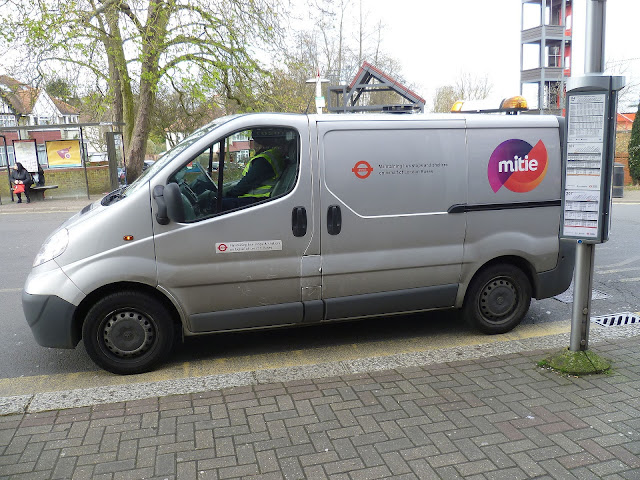
The misery of Mitie

Image
The failure of Carillion has brought to light widespread moral hazard in the outsourcing sector. For years, companies that deliver crucial public services relied on expectation of government support to keep their borrowing costs low and enable them to please shareholders by giving dividends they couldn't afford. They, and the banks and investors that funded them, assumed they were too important to fail. So when Carillion was on the brink of failure, RBS tightened the screws , clearly believing that the UK government would eventually cough up (my emphasis) : RBS....insisted that this revised arrangement "would be in place until support from [the Government] had been agreed and that the terms of this support would determine whether other uncommitted facilities with RBS would be withdrawn". But they were wrong. The UK government refused to provide support, preferring to allow Carillion to fail. That decision shocked the outsourcing sector to the core. In effect, it ha...

Clearing out Carillion's cupboards

Image
Those excellent researchers at the House of Commons Library have produced a briefing paper on the Carillion collapse. It is clear, succinct and well-researched. And extremely grim. The researchers seem to have gone back through the reports & accounts to about 2009. And they conclude that Carillion was a basket case not just in the last year of its life, but from about 2011 onwards. I've now done the same exercise, and I agree with them. Carillion's cupboards were virtually bare, and the little that was in them stank. This chart summarises the mess that Carillion got itself into: We need to be a little careful with this chart, of course, since it is comparing stocks and flows. But what it shows is that a large uplift in loans in 2010-12 generated absolutely no additional net cash revenue - in fact cash revenue actually fell between 2009 and 2016. For a company whose entire business model relies on increasing net cash flow, this is disastrous. The distressed upt...

The Swiss have eliminated the Zero Lower Bound

So, this is fun. Via Zero Hedge comes this report from a little Swiss website, Schweizer Radio und Fernsehen (SRF). It seems that a pension fund tried to evade negative rates on deposits by withdrawing a very large amount of physical cash with the intention of vaulting it. But the bank refused to allow it to withdraw the money in the form of physical cash. Is this lawful? Zero Hedge thinks it isn't. But the bank has not refused to allow the money to be withdrawn. It has simply restricted the form in which the money can be taken. Since electronic money and physical cash are fully fungible, it is hard to see how this restriction can be regarded as unlawful without undermining the value of electronic money - which would be highly destabilising in a modern monetary economy. And this effectively means that the zero lower bound does not exist..... Read the whole article on Forbes. Related reading: The ECB's policy mix is poison for banks - FT The strange world of negati...

The End of Cash Takes A Step Closer

Image
London's buses have gone cashless. From July 6, you can't use coins or banknotes on buses – you can only use the capital's “ Oyster” prepaid smartcards, its short-term general travel tickets known as “Travelcards”, or contactless bank cards. You can still buy Travelcards and top-up Oyster cards with cash, of course. But paying the driver of the bus with the last of your small change is now a thing of the past..... Find out about the implications for the future of cash here  (Forbes).

The problem of cash

I found a couple of fascinating articles by Willem Buiter discussing the future of cash. They date from 2009, but are still current today. In fact, as they address the problem that cash creates in a negative rate environment, they are even more relevant now. The "zero lower bound" (ZLB) constraint on interest rates exists because of the presence of non-interest bearing forms of money in the economy, of which the most important is physical cash. Were all money entirely electronic and interest-bearing, negative nominal rates would have become reality years ago. But where there are non-interest bearing forms of money that are near-perfect substitutes for interest-bearing forms, the view is that at the ZLB investors will switch funds to non-interest bearing forms of money rather than accept loss of principal. In short, they will hoard cash. The effect of the ZLB constraint is to force central banks to adopt all manner of peculiar ways of forcing real interest rates below ze...